Royal Systems/ James Loudspeakers by Sonance

James Loudspeakers by Sonance

For those who enjoy the best performing music systems, we have the best there is in outdoor music speakers – James Loudspeakers by Sonance. They are obsessed with thoughtful design, with utterly faithful audio reproduction and with the finest components. But, more than all of those, an obsession with the hidden nature of sound. Exclusive high-frequency drivers and precision woofers showcase an authentic mastery of speaker engineering, honed by decades spent designing high-endurance professional loudspeakers and installations. These designs will speak to you in a way few can, with absolute truth. James are singular in their quality, both robust enough for professional applications but sufficiently petite and abundantly musical for home use. Designed and built in America.

We are quite happy with the outdoor systems we install. All meet Royal sound standards, whether $500 per pair or $15,000 per system. A beautiful home deserves the right technology. Call us at 800-875-1531 for more information.

If Your Home Technology Integrator Doesn’t Provide Documentation, You’re Working With the Wrong Integrator

Luxury residential projects run on documentation.

Architects issue drawing sets. Interior designers develop detailed specifications. Structural engineers define assemblies and loads. Builders coordinate execution from structured intent rather than improvisation.

So when technology is introduced into that environment without the same level of documentation discipline, it is a communication gap and a standards mismatch.

In high-end projects, technology systems touch architecture, interiors, lighting, shading, electrical, HVAC, millwork, and landscape. That level of integration requires the same foundational language the rest of the team is already using: coordinated drawings and engineering documentation that define scope before construction begins.

When that documentation is missing or not readily provided, the project shifts away from design-led coordination and toward field-led interpretation. And that is where complexity turns into cost, delay, and compromise.

This is why professional standards bodies, such as the Home Technology Association (HTA), explicitly define engineering documentation as a core requirement for luxury residential integration work. It’s part of what qualified technology integrators are expected to offer before installation begins. In other words, design and engineering documentation is a baseline indicator of your integration partner’s competence.

Increasingly, integrators charge for consultation and design. It’s the important and time-intensive first phase of services luxury integrators offer (their other two phases are installation and aftercare support).

Whether they charge upfront design fees or not, however, the verdict is the same: If an integrator cannot produce clear, structured documentation early in the design process, they are not participating at the same level as the rest of the design team.

What Proper Integration Documentation Actually Represents

In well-executed projects, documentation is the mechanism that enables technology to coexist with architecture and interiors without conflict.

It defines how systems exist within the built environment before anything is constructed. That includes spatial requirements, infrastructure pathways, and coordination with other trades whose work is equally fixed and precise.

At this level, the most qualified integrators have moved beyond the role of merely installing equipment to become valuable design partners who engineer how technology systems fit into the architecture without disruption. Including:

  • Device placement coordinated with architectural intent and reflected ceiling plans
  • Equipment room layouts with power, cooling, and service clearances defined
  • Low-voltage infrastructure plans aligned with electrical, HVAC, and millwork coordination
  • Prewire, blocking, and mounting requirements resolved before framing conflicts occur
  • Cross-trade coordination notes that prevent ceiling, wall, and finish conflicts in the field

The practical outcome is fewer assumptions, change orders, project delays, and late-stage design compromises.

More importantly, design documentation ensures that technology decisions are made during design development, when changes are inexpensive, rather than during construction, when they are not.

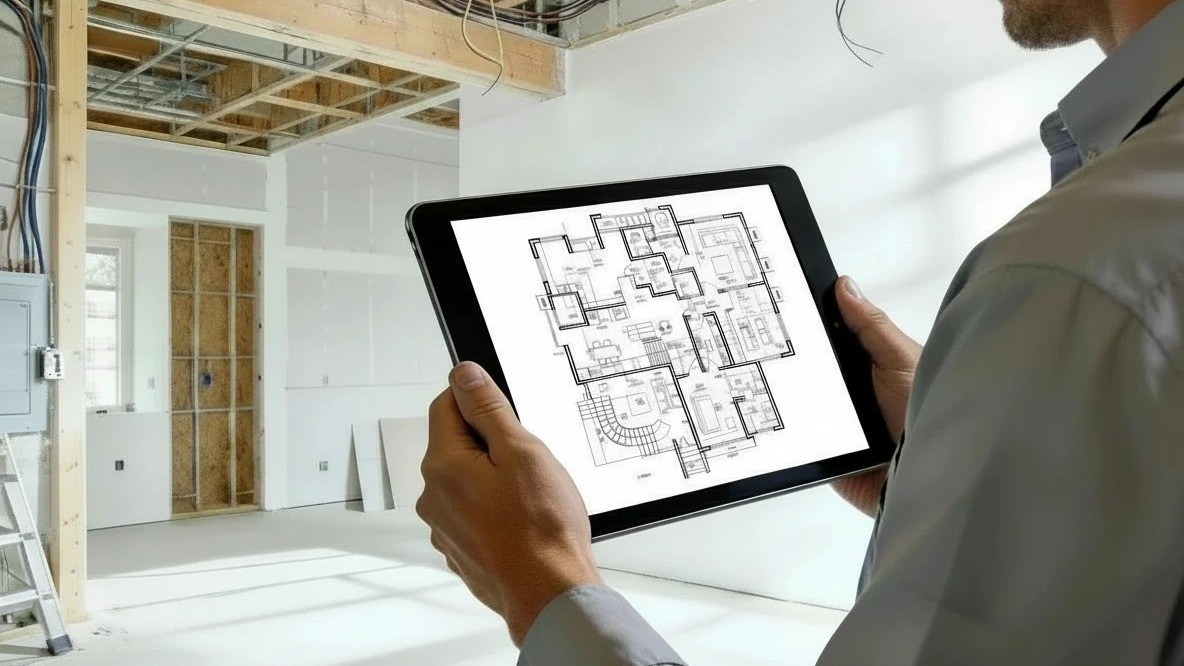
The HTA Design Partner program clearly defines the HTA’s standards for the types of design and engineering documentation needed for the design and build team, including: the prewire plan, electrical requirements, framing requirements, device placement drawings, equipment rack drawings, Wi-Fi heat maps, cooling requirements, and shade pocket requirements.

Visit the HTA Design Partner page to learn more about these types of drawings.

Documentation capability like this is a key distinction between competent home technology integrators and everyone else. At the luxury home level, the question is not whether technology gets installed correctly; it is whether it was ever properly designed into the project in the first place.


Find an HTA Certified Home Technology Integrator

The Home Technology Association’s mission is to help homeowners and home design & building professionals find the most qualified home technology installation firms for their home construction projects. To find an HTA Certified integrator near you, visit our directory.

If you are enjoying this content, please subscribe to the free HTA Home + Tech Design newsletter using the button at the top of this page for practical guidance on planning technology earlier in luxury residential projects

How to Enhance your Outdoor Entertaining and Relaxation Part 1- Your Music

Freestanding

Hearing your favorite artists while outdoors adds luxury and style to your home. When it comes to music in the yard, there are numerous options that deliver wonderful fidelity unobtrusively. We are enamored with a new generation of speakers that perform wonderfully and for most backyards, even the largest areas, a set of freestanding speakers and a subwoofer are all you’ll need. We feature several different performance levels, from quite good to concert grade. Yes… even us experienced audiophiles are astonished at how good the best of these sound.

In-Ceiling

A brilliant solution to outdoor sound are built-in waterproof ceiling speakers, perfect for covered patio areas. They are available as round, rectangular or square shapes, and can be painted or even fluted to match wood plank surfaces. For the highest performance sound, small-aperture style systems put a powerful speaker system inside the ceiling that plays through a sound tube. Kind of like an iceberg, what you see is a fraction of the gear, but what you hear is powerfully wonderful.

Hanging

The traditional outdoor speakers we’ve all seen hanging from eaves above patio doors or on the walls of the back of a home are still an excellent choice. These follow the design of bookshelf speakers but with polymer cabinets and weatherproof drivers. They typically mount on a ‘C’ shaped bracket and are easily removed if needed.

Landscape

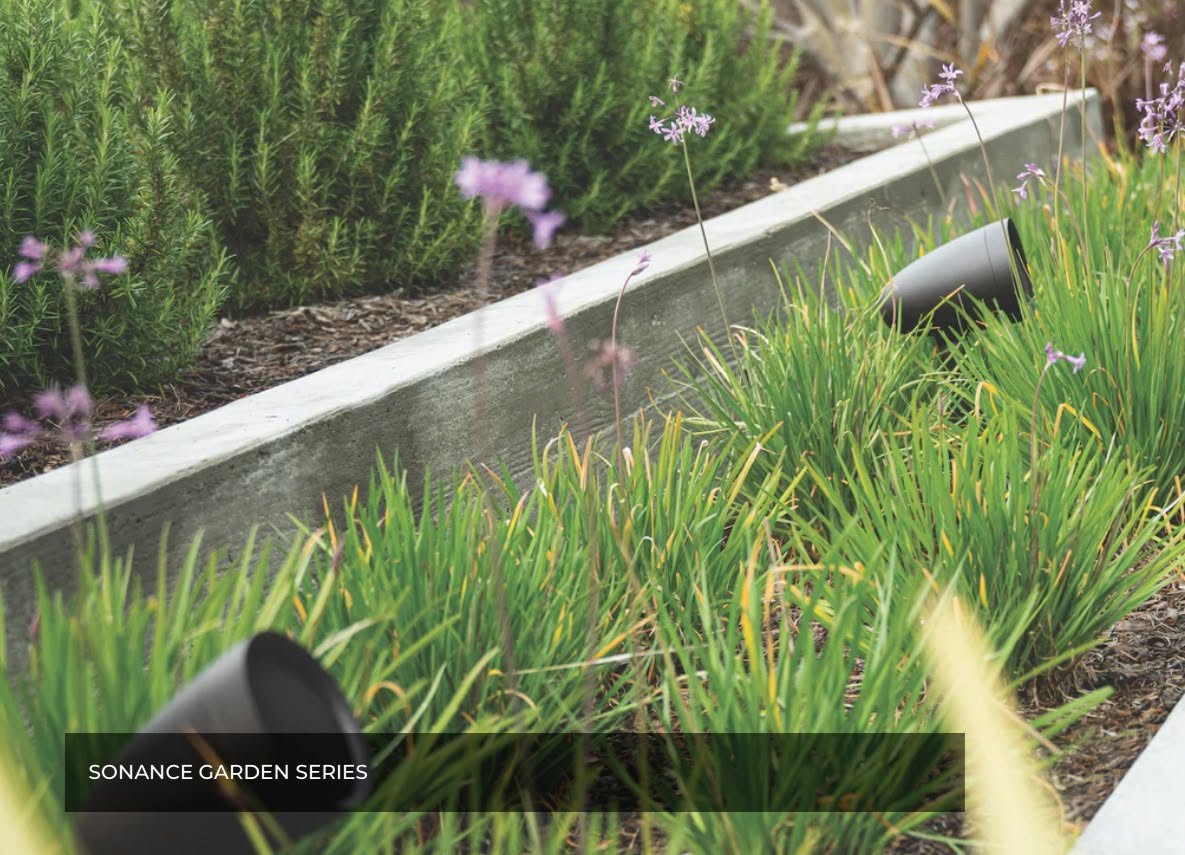
Garden Series speakers are a system of 8 satellite speakers and 1 in-ground subwoofer that are wired to a single amplifier. The results are a beautiful blend of performance and ease of installation. The system provides even, balanced coverage and can be expanded for up to 16 speakers and 2 subwoofers on a single amplifier. Easy on the eyes, and amazing on the ears.

Masonary

Hardscaping in your landscaping? We have the solution. A masonry box supports a variety of speakers allowing them to install into otherwise difficult or impossible surfaces like stone, cinder block, concrete, wood, and more. This creates a clean, precise finish into hard materials and surfaces. We offer models that can be built-to-order in custom sizes for specific product and application needs.

It’s not uncommon to have a mix of speaker types to cover a variety of backyard needs to get the coverage you desire. Many one these are bundled as systems, with matching amplifiers and subwoofers. It’s always better to have more smaller speakers specific to an area, then try to blast out from a single speaker where the sound is loud nearby and quiet further away. We have tested every major brand and know what works best. See the close-up selections below and contact us for a free at-home consultation to discuss the possibilities at 800-875-1531.

Backup Power and Internet keep you Productive and Safe

Power and internet outages are all too common, even in the best of times. There’s no reason to suffer through down time – we can help.

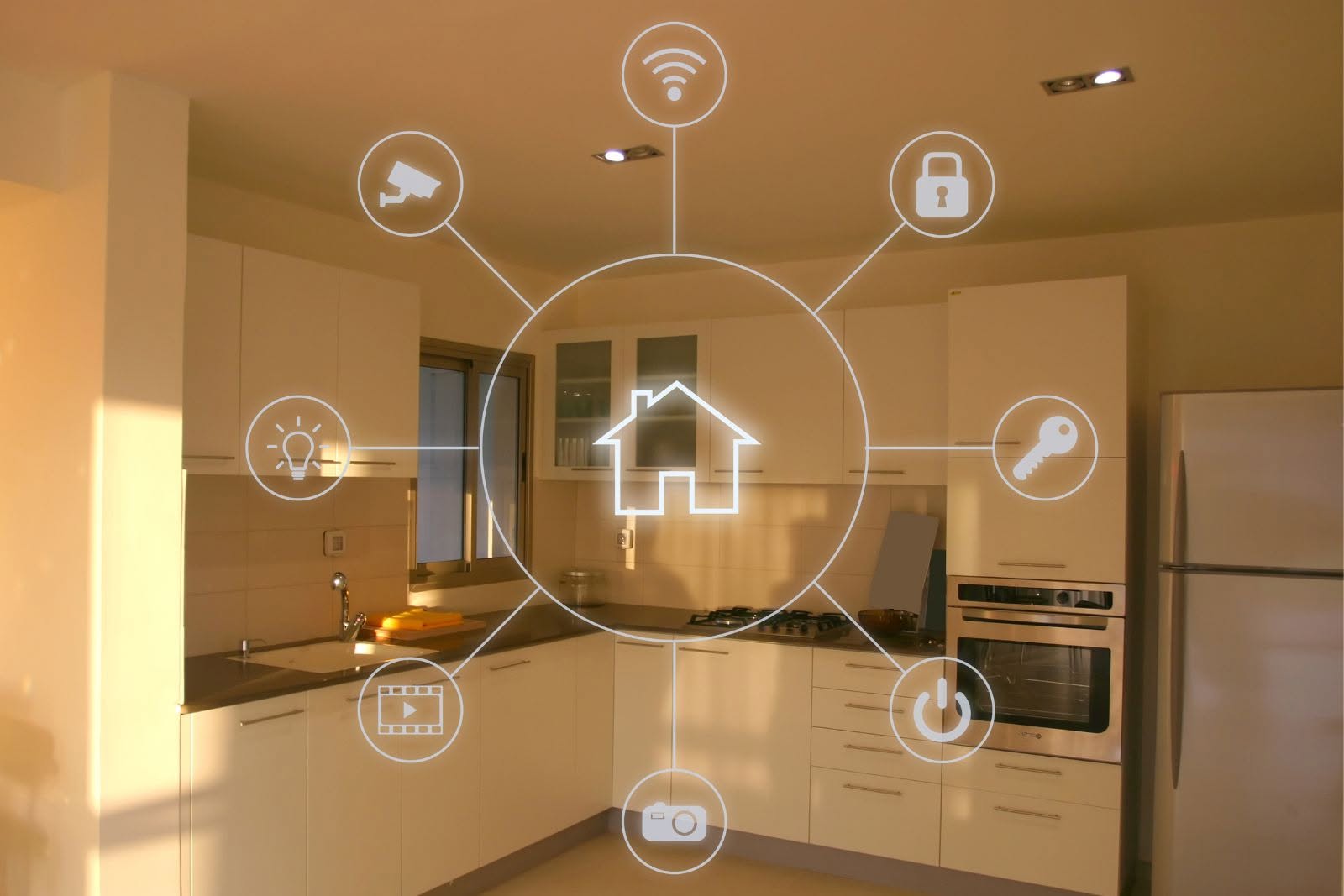
As a customer of Royal Systems, you likely have your video, audio, lighting, motorized shades, network and WiFi, surveillance cameras – all running on an integrated system. These are all connected to a Smart Controller, and all the key equipment is in a central rack. This rack is connected to power and the internet, the latter often supplied by Spectrum or a similar provider. Your system needs a steady source of uninterrupted power and internet. If the power goes down, even for a few seconds, your system will turn off then try to reset when the power comes back. Sometimes it can come back by itself, other times, not. Even if you have a standby backup generator, there’s a gap between when the power is out and the generator kicks in, which in effect, is the same as a power outage.

If your internet is out, most of your system will be disabled even if there’s power. While we’ve hoped that these utilities would improve with time, in fact, they’ve gotten less reliable.

POWER BACKUP

We can install Uninterruptible Power Supplies (UPS) on your equipment rack and ancillary gear. These devices are packed with features to keep vital equipment running with zero transfer time to battery backup in the event of power loss, ensuring seamless operation. We can supply minutes or even an hour or more of power covering short-term power loss or transfer to a generator.

INTERNET BACKUP

We recommend a Starlink satellite internet setup as a backup to local internet service. With our dual input routers, you can have both your traditional cable internet and the Starlink satellite setup connected and ready. If the local internet fails, Starlink automatically kicks in and can run as long as necessary until service returns, ensuring you are connected… and safe.

Contact us for a free at-home consultation or to discuss our recommended emergency services for your home at 800-875-1531.

If Technology Isn’t Discussed in Schematic Design, the Project Is Already Behind

Luxury homes are evolving rapidly. Lighting systems now shape mood and wellness. Shades are integrated into the architecture and design. Outdoor environments rival resorts. Networks support everything from security and entertainment to remote work and energy management.

Yet many projects still treat technology as something to “figure out later.”

That approach no longer works.

By the time framing begins, many of the most important technology decisions have already been made—whether intentionally or accidentally. Equipment locations, lighting control strategies, Wi-Fi coverage, shade pockets, speaker placements, rack ventilation, conduit pathways, and infrastructure requirements depend on decisions that should ideally happen during schematic design, not after.

When technology planning is delayed, projects begin absorbing avoidable risk almost immediately.

The Hidden Cost of Waiting

Most project teams would never postpone discussions around HVAC, plumbing, or structural engineering until construction documents are complete. Technology, however, is often treated differently, despite becoming one of the most interconnected systems in the modern home.

When technology enters the conversation too late, the consequences tend to show up everywhere else:

  • Compromised aesthetics
  • Last-minute change orders
  • Insufficient power or cooling
  • Poor Wi-Fi performance
  • Visible devices and wiring
  • Inadequate equipment space
  • Lighting and shading coordination issues
  • Budget surprises
  • Construction delays

In luxury residential projects, these problems are rarely isolated. One missed technology conversation can ripple across multiple trades.

A shade pocket impacts drywall and ceiling details. A hidden television affects millwork and framing. A lighting control keypad impacts electrical planning and interior design. Outdoor audio, security, and networking require coordination long before landscaping begins.

Technology is no longer a standalone category. It is infrastructure.

The Best Projects Plan Technology Early

The highest-performing projects tend to share one thing in common: the technology integrator is brought in during schematic design, not after the house is already engineered.

This early collaboration allows the project team to coordinate:

  • Low-voltage prewire and conduit pathways
  • Equipment room size and ventilation
  • Lighting control locations
  • Motorized shading requirements
  • High-performance lighting fixtures
  • Audio/video concealment strategies
  • Network and Wi-Fi planning
  • Exterior technology infrastructure
  • Dedicated power and cooling
  • Future-ready cabling
  • Coordination with electrical, HVAC, millwork, and lighting trades

Just as importantly, early planning protects the architectural and interior design vision. Good technology should complement the home, not compete with it.

Documentation Changes Everything

One of the clearest indicators of a professional technology firm is documentation.

Detailed drawings and engineering documents help architects, designers, builders, and subcontractors coordinate before problems appear in the field. They clarify intent, reduce assumptions, improve pricing accuracy, and help preserve schedule integrity.

Without documentation, technology often becomes reactive. Decisions move from the drawing set to the jobsite. That usually means more site visits, more revisions, and more compromises.

If your home technology partner doesn’t provide documentation, that’s a huge red flag. The earlier the technology is documented, the smoother the project tends to run. HTA’s article on the importance of technology documentation in today’s luxury homes goes deeper into the subject.

The Integrator’s Role Has Changed

The stereotype of the “AV guy” showing up late in construction with televisions and remotes is increasingly outdated.

Today’s leading technology integrators are often involved in lighting systems, shading, networking, wellness technologies, security, outdoor entertainment, energy management, and infrastructure planning. In many luxury projects, integration firms function as both technology consultants and system integrators.

That role only works when collaboration starts early.

Technology Is Now Part of the Architecture

Modern homes are expected to deliver seamless experiences. Homeowners want lighting, entertainment, comfort, security, and connectivity to feel intuitive and invisible. That outcome rarely happens by accident.

The most successful projects treat technology the same way they treat every other critical design discipline: as something that deserves thoughtful planning from the very beginning.

Because if technology isn’t discussed during schematic design, the project is probably already behind.

Stay tuned for our next newsletter, in which we will discuss the importance of home technology documentation in detail.

Subscribe to the free HTA Home + Tech Design newsletter for practical guidance on planning technology earlier in luxury residential projects


Find an HTA Certified Home Technology Integrator

The Home Technology Association’s mission is to help homeowners and home design & building professionals find the most qualified home technology installation firms for their home construction projects. To find an HTA Certified integrator near you, visit our directory.

System Care During The Crisis

1. POWER Most of the system issues coming in to our offices relate to power outages, surges and irregularities. If you lose then regain power, most of your system function should come back on its own. Please wait 15 minutes after power is restored and functioning consistently, before trying to operate the equipment. This will give all the processors time to reset. If your system is not working fully or partially after power is restored, call our office or your ROYALcare team for assistance. In many cases, we can remotely access your system and help with restoration.

2. HEAT If your air-conditioning system is not properly functioning and the equipment rack room is not cooling, it’s best to try to get some circulation in the room. The system can operate in a slightly warm environment, but if the room is heating up too much, it’s better to shut down the system until conditions improve. Contact us for further information.

3. SMOKEY AIR A small amount of a smokey smelling air is not detrimental to the system. If you can breathe the air in your room, the system can function. Periodically check that air is circulating in the equipment room, and not accumulating smoke.

Considering a system update?

A new, larger TV? Outdoor sound? Better WiFi? A gift for your partner? We do everything technological and you don’t even need to leave your home to shop. If you are considering taking advantage of holiday sales, we’ve got that covered as well. We match any advertised specials on TVs, audio or just about anything that we carry. Better yet, you get a Royal Systems expert technician to handle the wiring and installation in the most professional manner.

Contact us for a free at-home consultation or to discuss the possibilities for your home at 800-875-1531.

7 Foot and Bigger TVs are here. Enjoy better Movie Nights with Family and Friends right in Time for the Holidays.

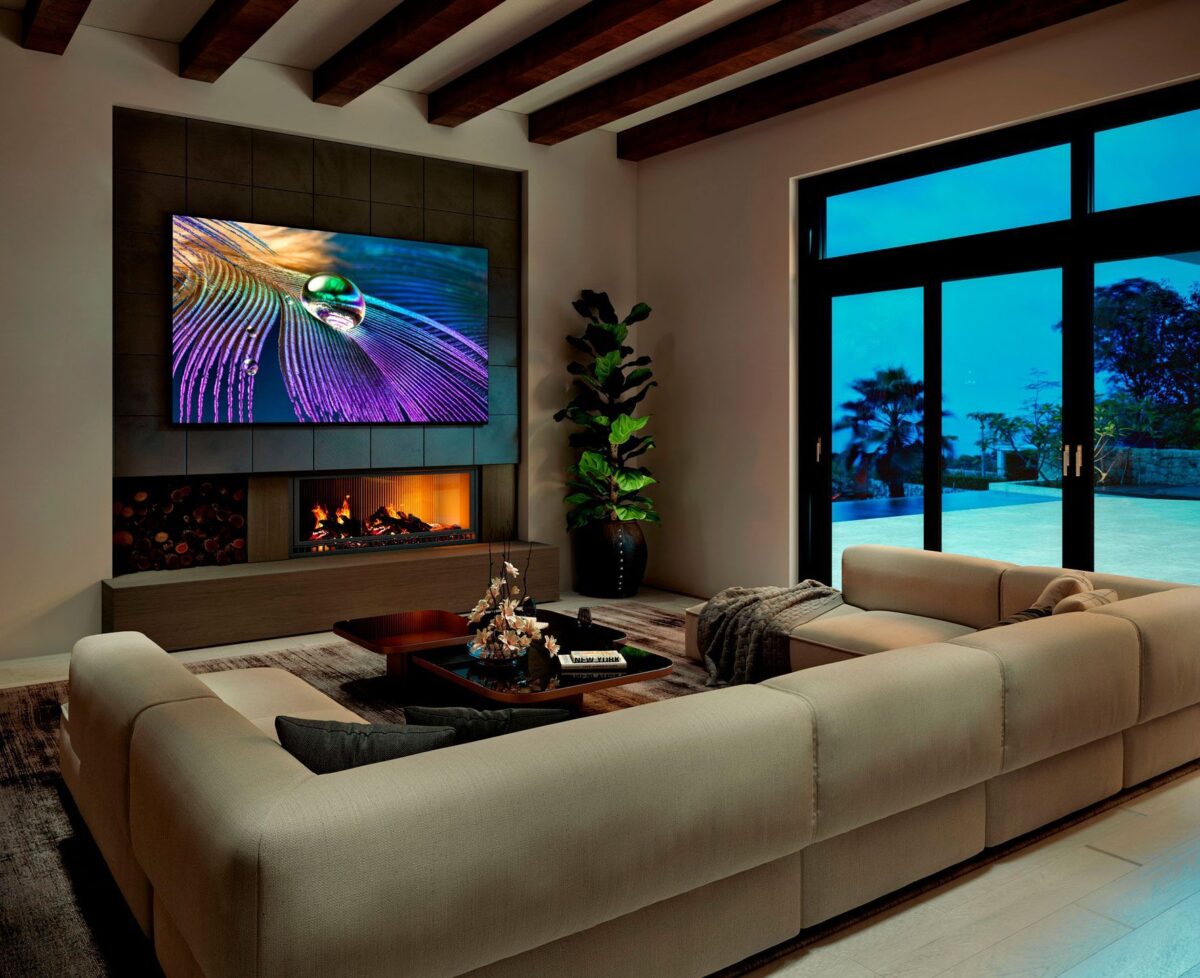
It wasn’t that long ago that a 40″ TV was considered a big screen and anything over 72″ was a home theater. Times have changed for the bigger and better. How does 146″ look? All we can say, is WOW! What’s driving the trend towards bigger sizes? A number of factors. First, you get a better experience with a bigger TV. When watching someone on the screen that is the same size as a real person, you put yourself in the scene. Think football, movies and events. It’s enveloping, involving and more fun. Second, the coronavirus stay-at-home period drove more interest in engaging entertainment – and demand for the biggest TVs rose. All of this contributed to mass production which has driven down prices for the largest screens.

The most common ‘big’ TV size this year is 85″… just a smidge over 7 feet (!) The best 85-inch TVs aren’t just big, they offer an immersive home theater experience and are packed with high-end TV tech. Their advanced detail and motion processing ensures the best picture – even up close. While 85-inch TVs are big, they’re still as thin as their smaller siblings. How big can you go? 98″ is now becoming a standard, and a 146″ modular MicroLED ‘Wall’ is the new definition of ‘big’. Remember, these are ‘TVs’ that mount flat on the wall, not a 2-piece projection setup. Speaking of which, the buzz in 2-piece systems are Ultra Short Throw projectors, which offer another way to go big – all the way from 100″ to 130″… that’s nearly 11 feet!

Contact us for a free at-home consultation or to discuss the possibilities for your home at 800-875-1531.

Landscape Lighting and Sound – Brilliant!

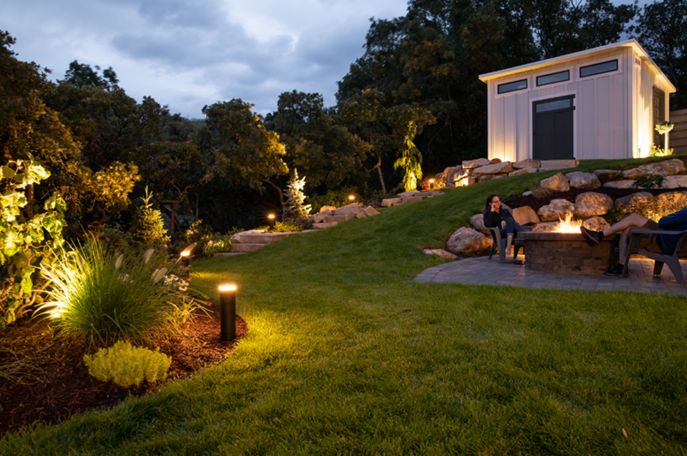
Let’s enjoy the better weather! Hearing your favorite artists while in your yard adds luxury and style to your home. When it comes to high-fidelity music in the yard, there are numerous options that deliver fidelity unobtrusively. We are enamored with a new generation of in-ground speakers that perform wonderfully. For most backyards, even the largest areas, bollard style, slim-tower speakers are unobtrusive and sound amazing.

Landscape lighting improves your home’s beauty, security, and safety. Enjoy your outdoor spaces long after the sun sets, and enhance the beauty of your property. Exterior features, such as trees or shrubs, pathways, and architectural details are illuminated with specialized lights that enhance their features as well as add shadows for a dramatic effect.

“Outdoor speakers.” “Landscape lighting.” Putting the two together is an idea that’s long overdue. Enter Episode Radiance landscape lights with speakers. Not only do they look and sound fantastic, they are built for the outdoors. Selectable settings on the speakers allow for detailed tuning and balancing, enabling the individual volume to be set while the entire system is adjusted as a whole. They are available in black or white powder-coated finishes to complement a wide variety of tastes and designs. The housing is built to last with a UV-protected finish and IP66 certification for superior protection against water and dust. The resilient all-metal construction and heightened environmental protection, ensures every built-like-a-tank Radiance, will perform reliably for years of outdoor enjoyment.

Contact us for a free at-home consultation or to discuss the possibilities for your home at 800-875-1531.